The concept combines private living spaces with shared facilities and digital services, enabling residents to live comfortably, stay connected and access support when needed.
Groupius Wonen is a senior housing concept focused on creating future-proof living environments that evolve with residents over time. The homes are designed to feel like high-quality residences rather than traditional elderly housing, while integrating technology and services that support long-term independence.
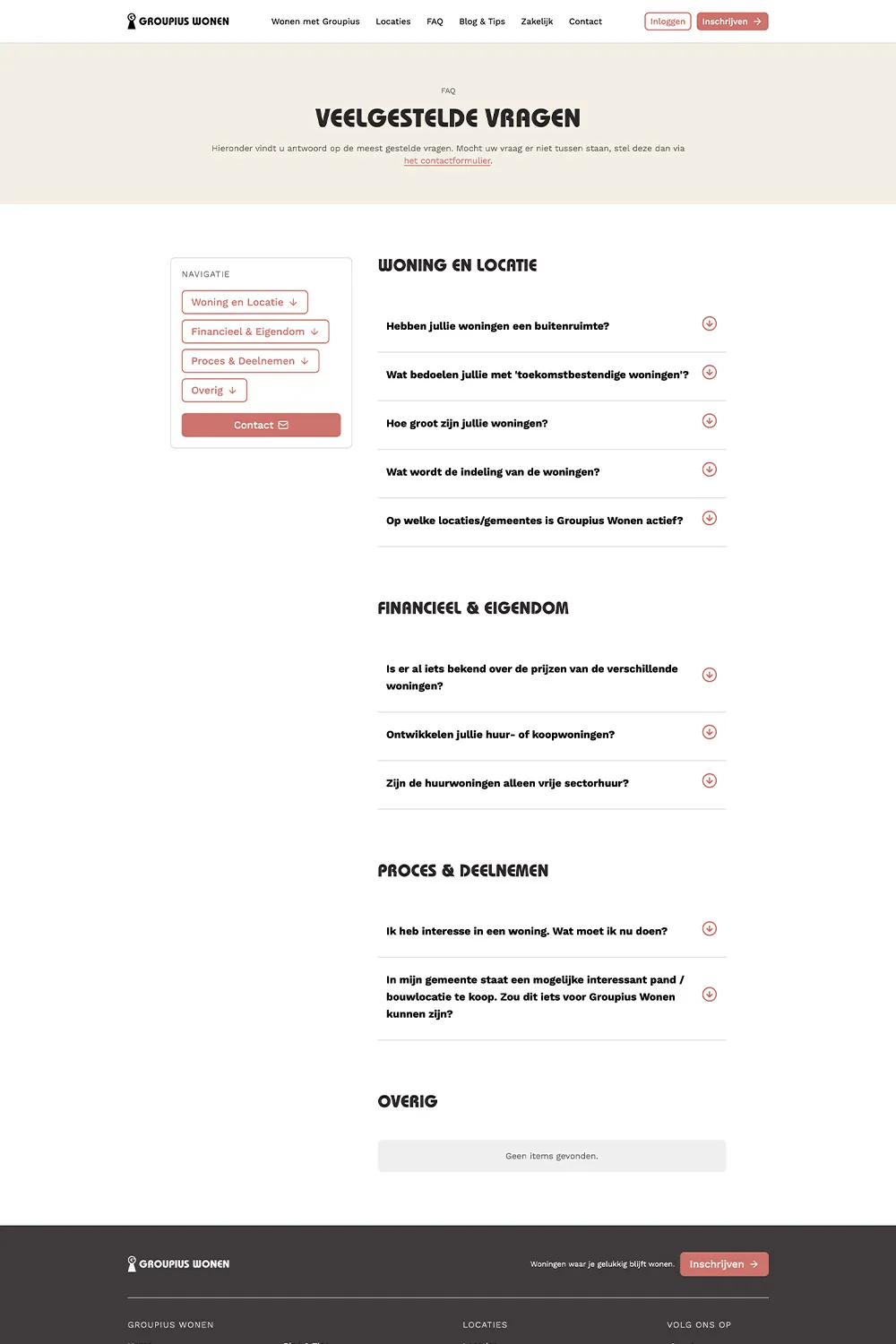
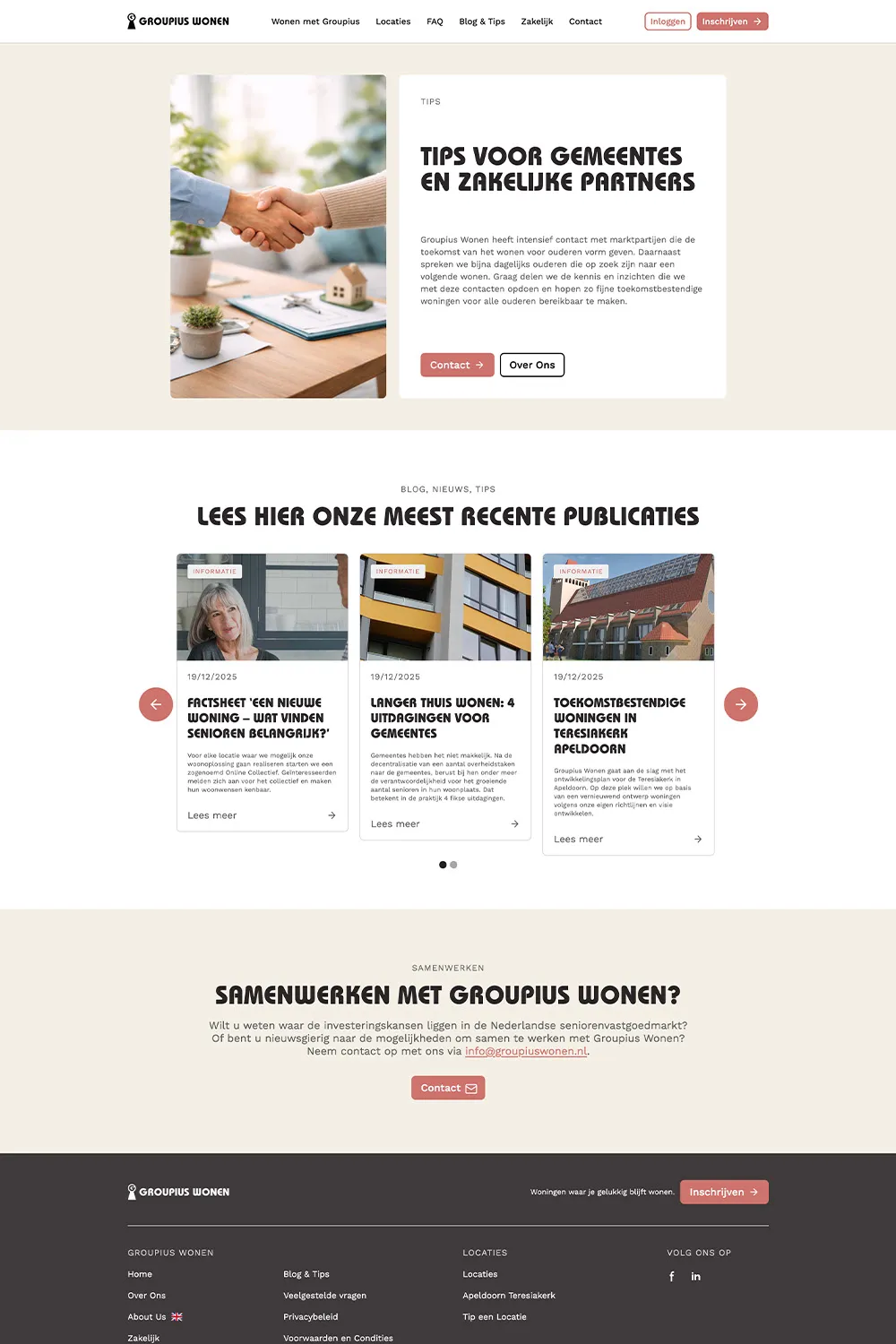
To support its housing concept, Groupius Wonen required a digital system that connects marketing, resident onboarding and ongoing tenant interaction into a single, coherent experience.
The transition from website visitor to registered resident and tenant needed to be clearly structured.
Information collected through the website needed to be structured and accessible within a central system to support internal processes.
As new developments are introduced, the system needed to support multiple locations while maintaining consistency and clarity.
Beyond initial registration, the system needed to support continuous interaction with residents as support.

Designing the digital platform for Groupius Wonen required connecting the public website with a unified CRM and tenant portal system, ensuring a seamless transition from initial interest to fully onboarded resident access.
The platform needed to support distinct stages - from joining the living collective, to submitting an application, to becoming a verified tenant with portal access - each requiring different levels of engagement and data handling.
Outseta functions as both CRM and access layer for the tenant portal. This required structuring how user data flows from the website into the system, and how accounts are created, managed and granted access at the right stage.
User data evolves throughout the journey - from lead to applicant to tenant. Maintaining consistency across these transitions was essential to ensure correct account status, communication and access permissions.
With Outseta also handling support through its ticketing system, the platform needed to integrate multiple functions - data management, communication and support - within a single environment.
Beyond initial conversion, the system needed to support long-term support through the tenant portal, allowing residents to access manuals, essential information and support in a structured way.
To support the full resident lifecycle, we designed and implemented a connected digital platform where the website, CRM and tenant portal operate as one integrated system.

We designed a clear progression from joining the living collective, to application, to verified tenant access. Each stage is supported by dedicated flows, ensuring users move through the system in a structured and intuitive way.
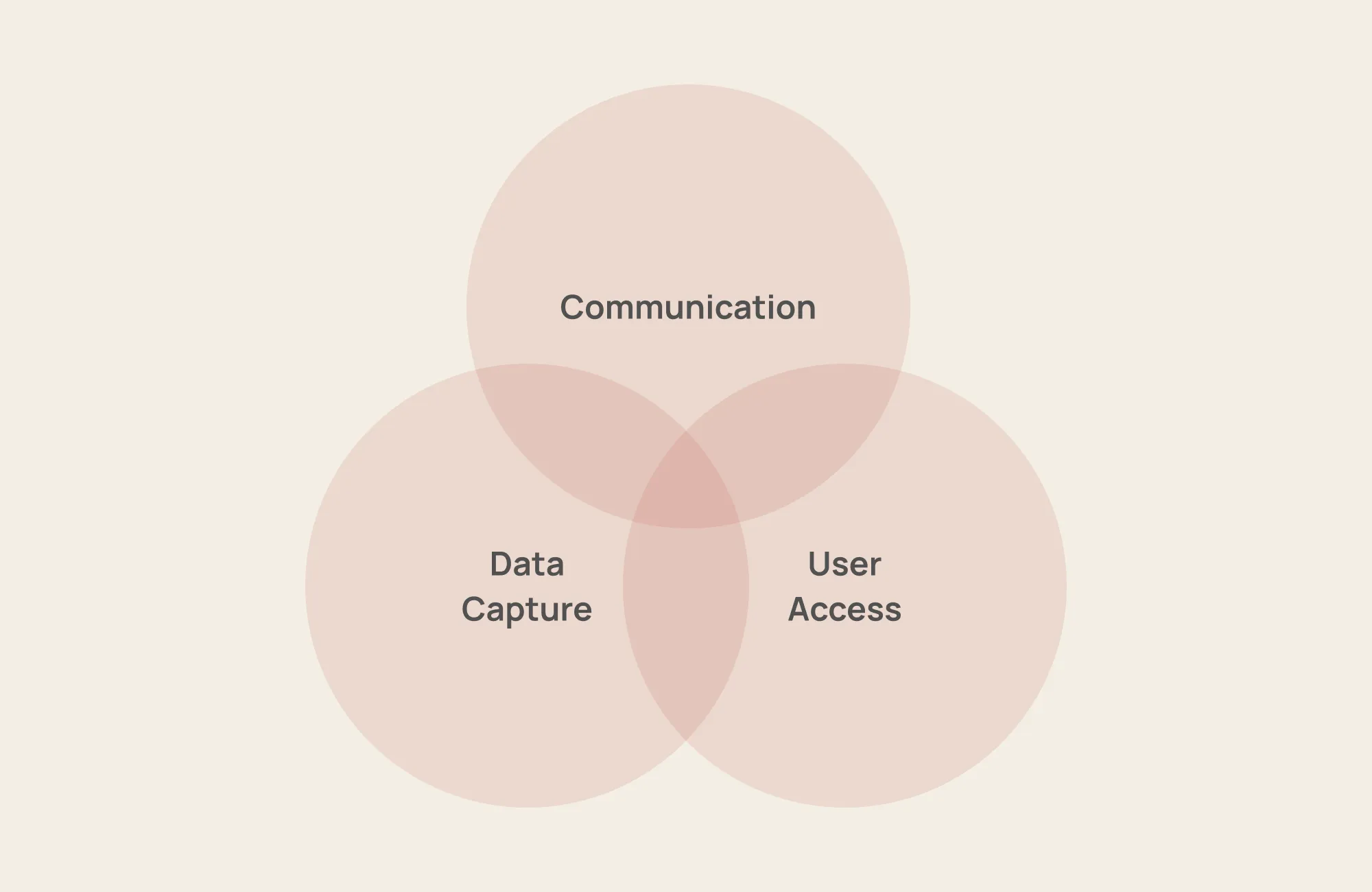
We integrated both, the CRM and authentication layer, enabling seamless data capture, account creation and access management within a single system.
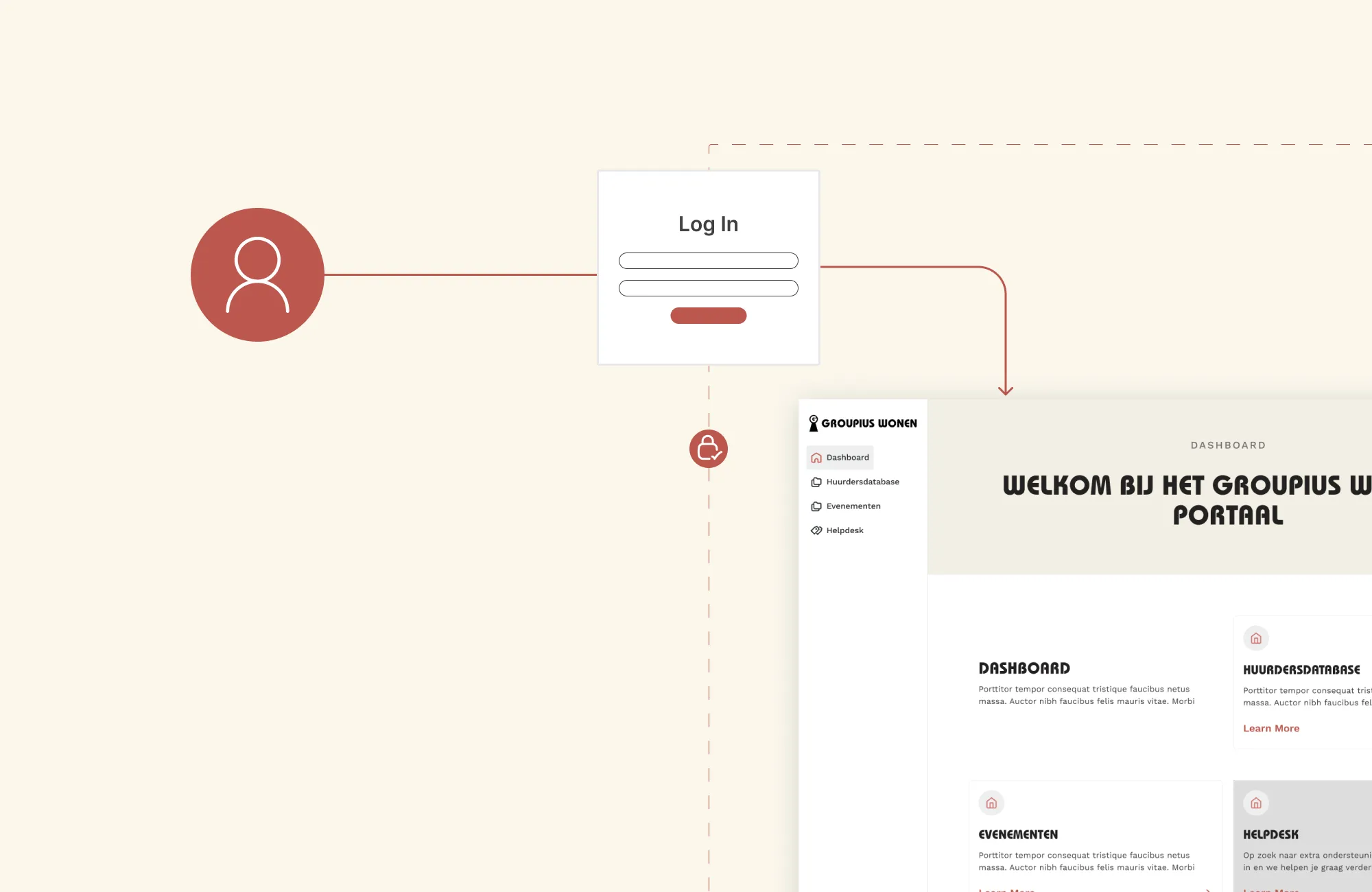
We created a system where access to the tenant portal is granted only after approval, ensuring a clear distinction between interested users, applicants and active residents.
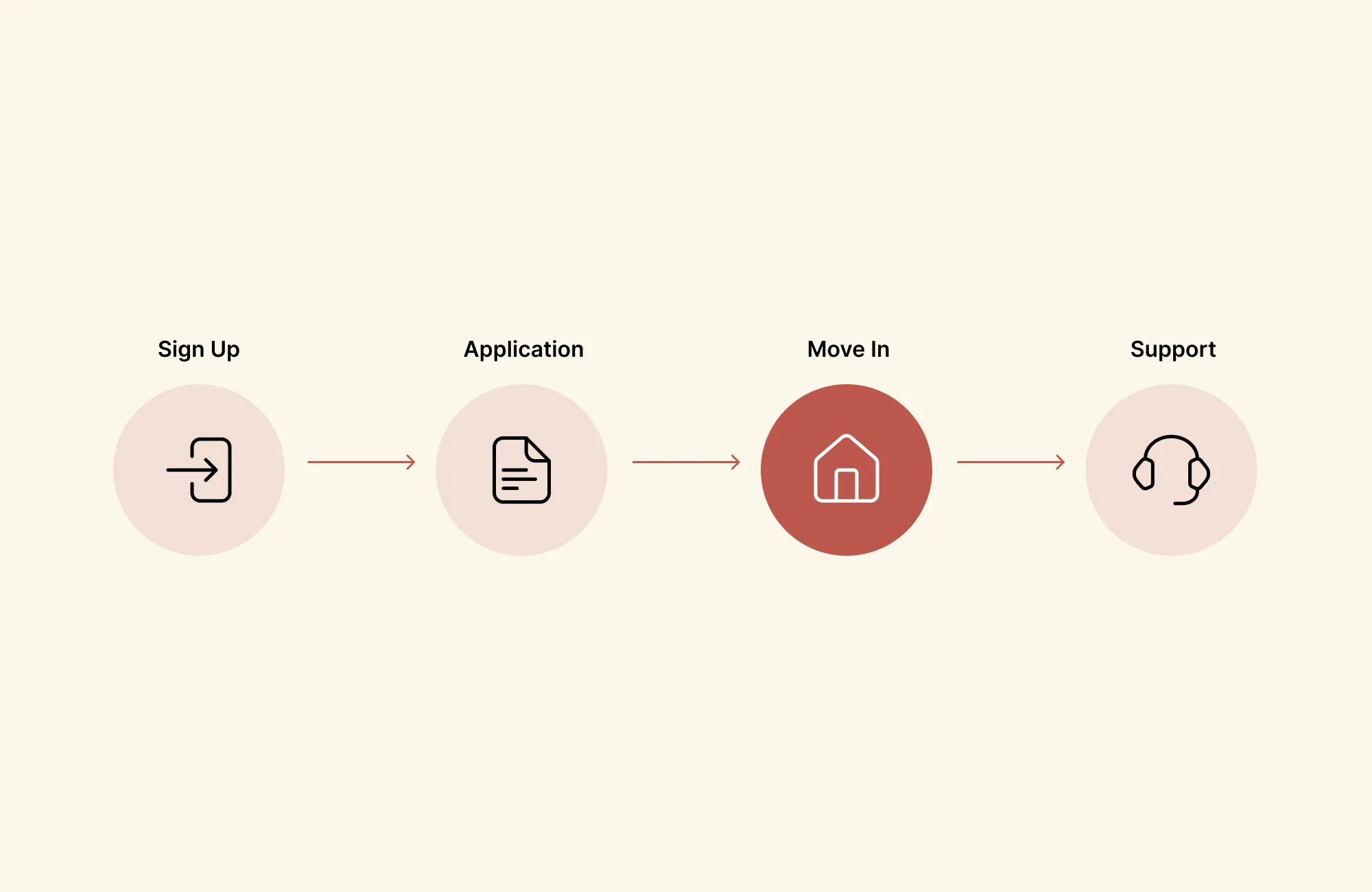
User data is centrally managed, allowing smooth transitions between stages while maintaining accurate account status, communication and permissions.

Single environment for ongoing resident interaction, combining tenant portal access with built-in communication and support through its ticketing system. This allows residents to manage their accounts, access services and communicate with the team in one place.
The platform architecture is designed around how users interact with 1828 across different stages of locations. Clear pathways guide users either towards registering for available locations or expressing interest in upcoming ones, ensuring a simple and intuitive experience.
We structured the system to support two primary journeys — active registration and future interest — while keeping content, data collection and communication aligned across the platform.
→ Serves as the main platform for the public website
→ Handles location pages, user flows and registration entry points
→ Provides a flexible structure for managing content and scaling new locations
→ Stores registration data from live locations
→ Acts as a lightweight database for managing applicants
→ Connects website forms with communication and databse tools
→ Automates data routing between platforms
→ Ensures consistent and reliable data synchronisation
→ Manages interest lists and audience segmentation
→ Handles registration-related communication
→ Supports automated responses and email templates
→ Serves as the main platform for the public website
→ Handles location pages, user flows and registration entry points
→ Provides a flexible structure for managing content and scaling new locations
→ Stores registration data from live locations
→ Acts as a lightweight database for managing applicants
→ Connects Webflow forms with Mailchimp and Google Sheets
→ Automates data routing between platforms
→ Ensures consistent and reliable data synchronisation
→ Manages interest lists and audience segmentation
→ Handles registration-related communication
→ Supports automated responses and email templates







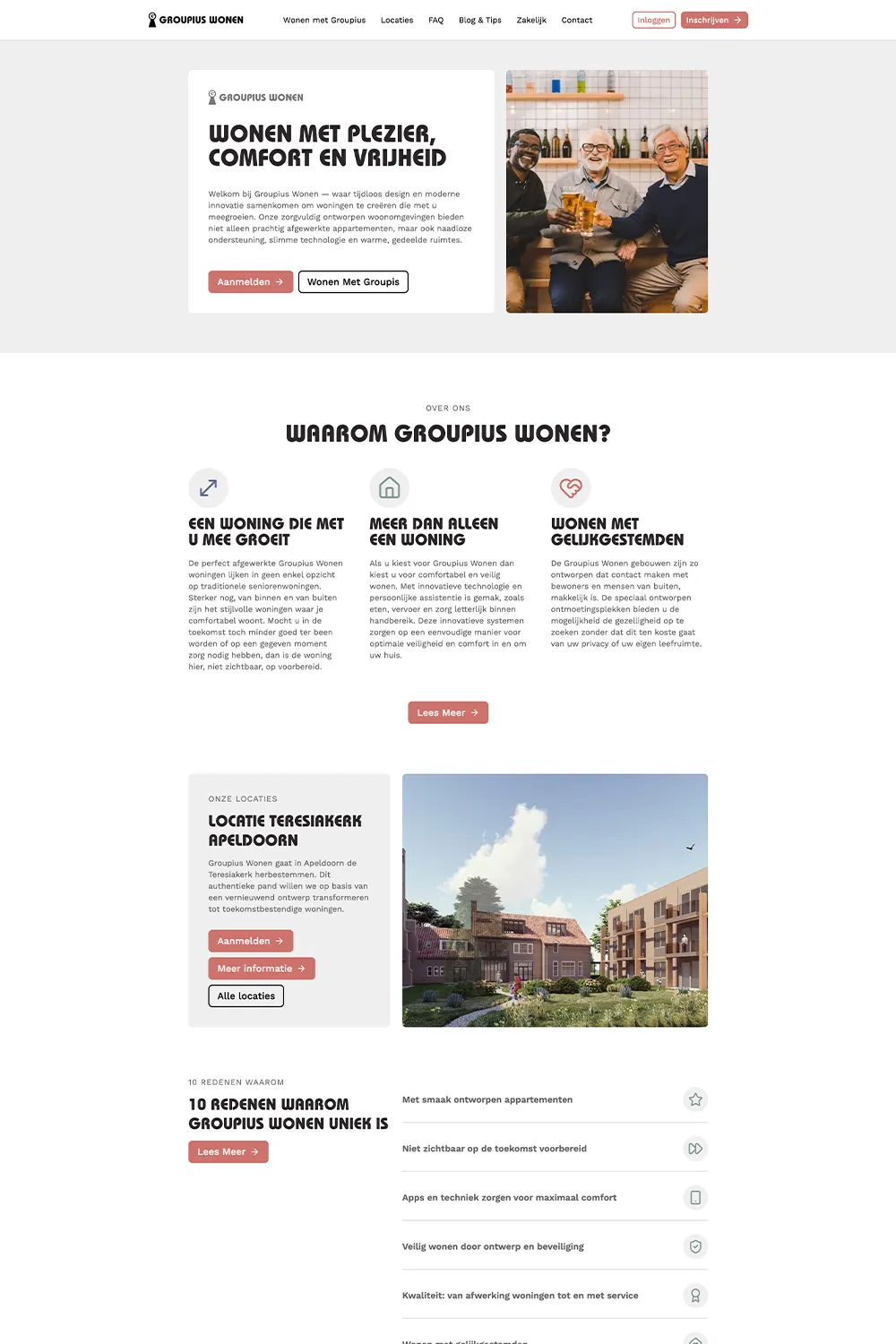
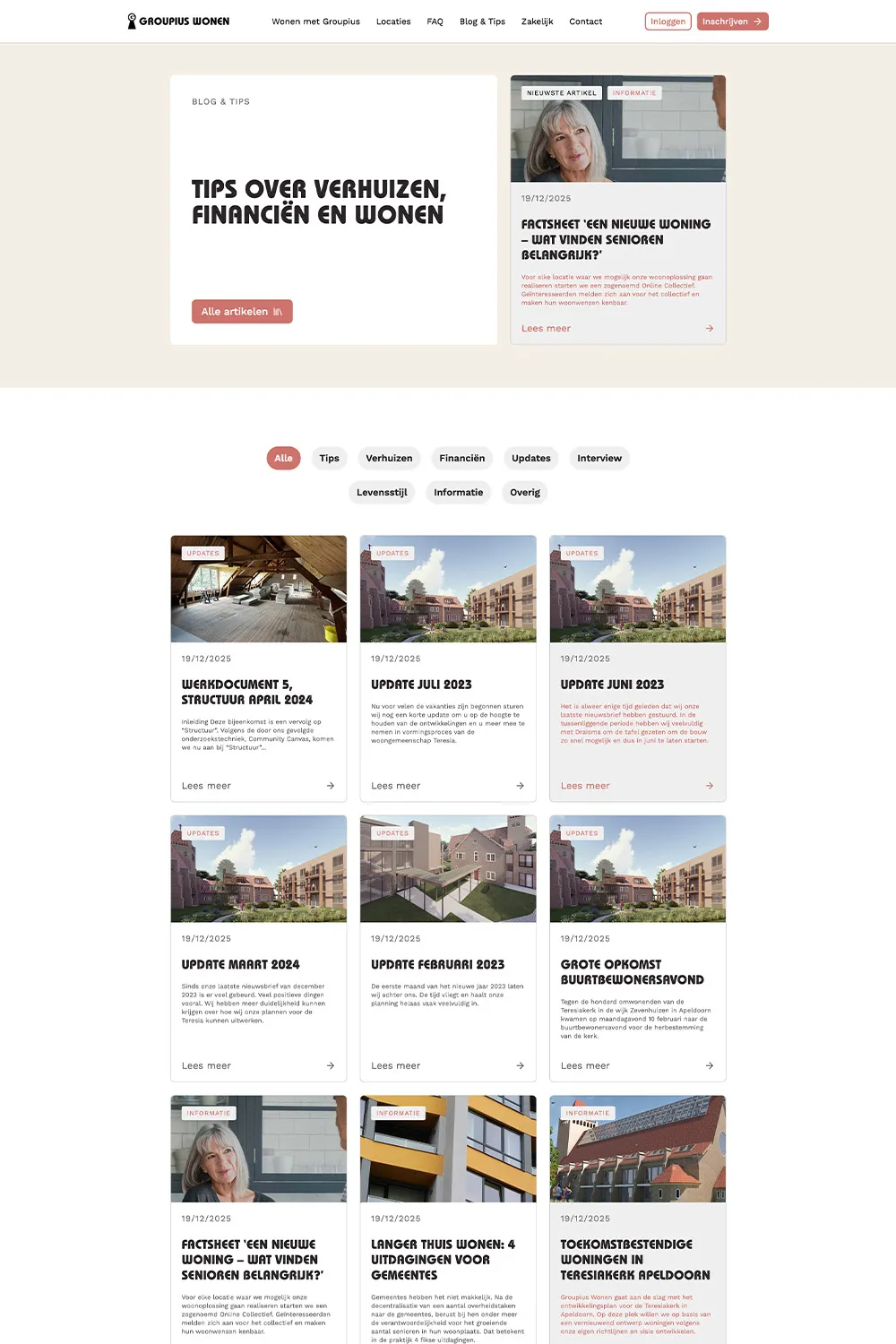
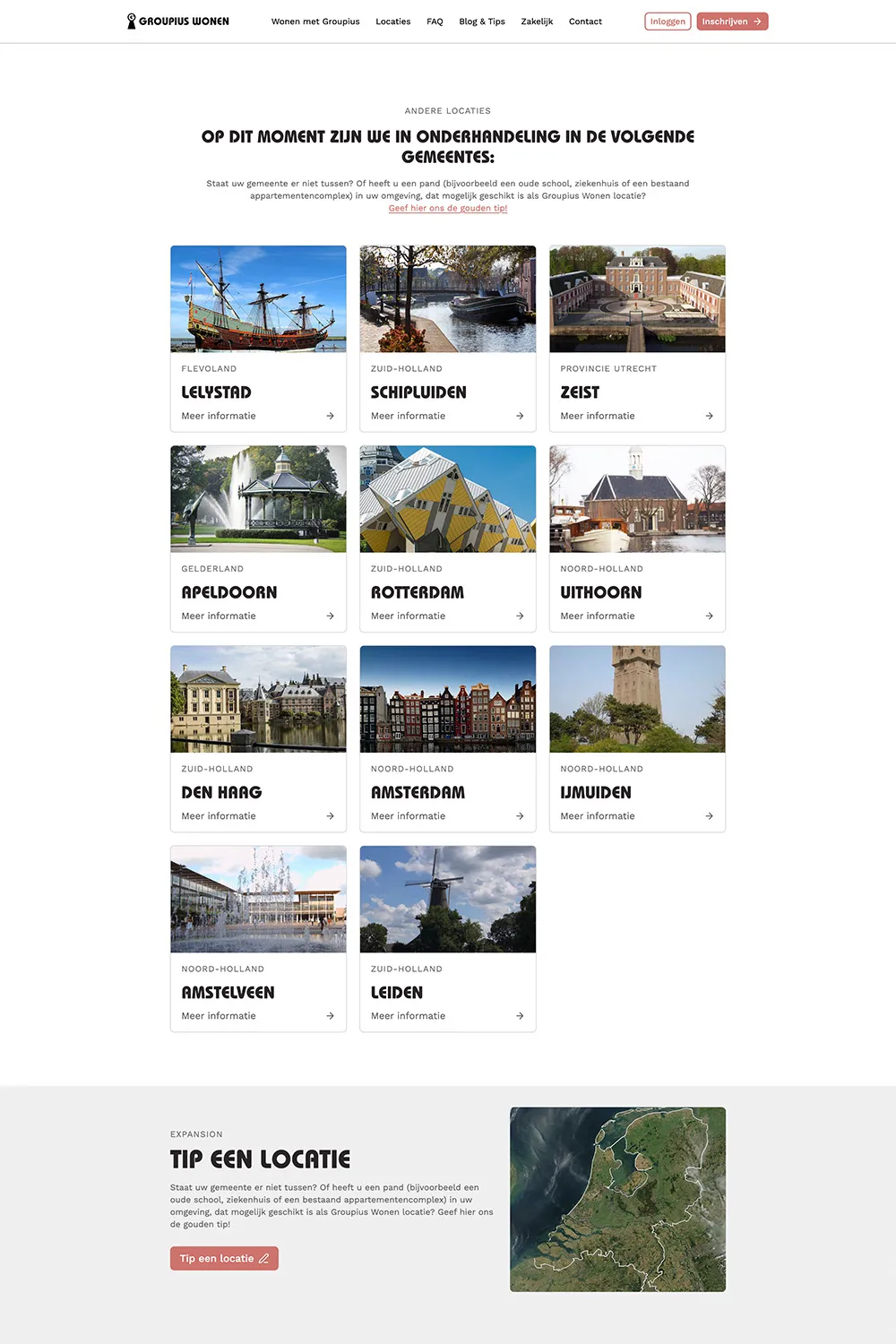
Building the digital infrastructure for 1828 highlighted the importance of designing systems that balance simplicity for users with complexity behind the scenes. Combining no-code tools, automation and structured thinking allowed us to create a scalable operational foundation.
Digital platforms in housing must mirror real-world processes — from interest to application to tenancy — ensuring users move through clearly defined stages.
When CRM also handles authentication and access, it becomes the central layer of the product - not just a data tool, but the foundation of the entire user experience.
Designing gated environments with intentional access levels helps maintain structure, ensuring the right users access the right parts of the system at the right time.
Combining CRM, tenant portal and support into a single system reduces fragmentation and creates a more coherent experience for residents.
A well-structured system allows the platform to grow with new residents, locations and operational needs without requiring fundamental changes.